Author Archives: admin

Abelam to Kwoma and back – preview

Preview of Abelam to Kwoma and back – August 2013

There were two spectacular ceremonial openings organised by the artists who displayed their work in Brisbane at APT7 that we saw on this trip to the East Sepik. Justin and I were also doing a mini cultural eco-tourism potential reconnaissance survey on the side to try to assist the communities to benefit from the exposure their work had in Brisbane.

Kwoma : Opening of a new spirit house in Tongwinjamb #3 5th August 2013

OLYMPUS DIGITAL CAMERA OLYMPUS DIGITAL CAMERA KW 3 Tjmb aug mf dscn7211 OLYMPUS DIGITAL CAMERA

The respective openings and festivities in the Abelam and Kwoma were spectacular visual, musical, and performance events. The night music show done on the ridge platform of the new spirit house in Tongwinjamb in pitch darkness was very accomplished in composition and in its performance. It was magical, and was worthy of being staged, for example, in Hamer Hall in Melbourne. The Kwoma guys opened a new spirit house that they had been working on when they were commissioned for APT7 in 2011at Tongwinjamb with an official opening program in the morning, and a music performance at night. The next day was another set of ceremonies and festivities and more night dancing, There were dancing local village groups and also some from three nearby places but from different directions, and there was also a lot of art on display.

Abelam : Mini Yam Festival at Brikiti -an Apengai village

Ablm 1 brikiti ff g_hse beyond img_0394 Ablm 2 mf dscn7789brikiti show 2013 Ablm 3 mf dscn7963brikiti 9aug2013 Ablm 4 mf dscn7798brikiti show 2013

The Abelam guys had a Mini Yam Festival that involved an initiation ceremony and unusual associated display of an interior chamber inside an old house. A number of young guys were taken through a stage of male initiation and there were some spectacular dancing groups performing. There was also some newly revived art, not seen since the 1980s, from Ilahita, the co-organisers of this show. Although crammed into one day, and a bit chaotic in starting, this was a well supported event with considerable local interest and enthusiastic local and neighbouring participation. A new spirit house is going to be built to replace this one which is well past its use by date.

Frederick Rodney Fowler archival material

Frederic Rodney Fowler  - Guadalcanal watercolour painting 1943 Frederic Rodney Fowler  - Lae watercolour painting 1945 Frederic Rodney Fowler  - Lae watercolour painting 1943 Frederic Rodney Fowler  - Salamaua watercolour painting 1944

FRF archival material.   The late Frederick Rodney Fowler went to New Guinea in 1941 arriving in Rabaul by ship just as a dramatic, but not very destructive volcanic eruption was beginning. He was an ANGAU medical orderly during WW2 and in the clean-up process afterwards.  Rod Fowler was Martin’s father, and he left Martin a significant collection of such material in his estate.

He had small pencil and watercolour sketchbooks, and a small 35mm camera with him during these years. These are a few samples from the many art studies he did at that time.

Frederic Rodney Fowler  - pencil portraits 1940s Frederic Rodney Fowler  - pencil portraits 1940s Frederic Rodney Fowler  - pencil portraits 1940s Frederic Rodney Fowler  - pencil portraits 1940s

FRF portraits x2 mid 50s FRF trobs gawilw prow 1946

Material Culture and EcoTourism Project

Abelam—Ilahita—Wosera—Kwoma  by road, on foot, and by canoe
25 July to 15 August 2013
Martin Fowler, Justin Francis  –  Team leaders
Harris Bein – East Sepik liaison & logistics

rivers combo  bro L Book cvrs Abelam stamps Hist  wb 12 Abelam Apengai-Nelig-Apng bro wb 18

The survey

This project is to do a representative sample survey of the cultural, geographic and ecological assets in these areas to gauge their potential to attract overseas tourists.
The process will be to :

(a) make an inventory of cultural, environmental and experiential assets
(b) conduct a basic survey of village desires, awareness of tourist expectations, and preparedness for tourism.

The criteria to be satisfied relate the places and activities to their potential to contribute to a locally sustainable small scale industry.  There are obvious attractions in both areas (see the images) but the survey questions relate to quantity and quality :

  • is there enough critical mass there to make the expensive journey there worthwhile?
  • are local travel, walking tracks, guides, food and accommodation comfortable and reliable enough to attract paying tourists in C21st?
  • do the village people know and/or have records of their artistic and built heritage?

Survey Proposal Background 

The imperative to do this survey came from the desire of a number of artists in these communities to find ways to support the continuity of their cultural heritages including their artistic skills and their stewardship of their natural environments —which always were integral to their survival (both as people and as cultural entities).   It is important to realise that 38 years after independence means a whole new generation, the majority, have grown up since the time when their arts were famous and valued by outsiders.

The catalyst was the involvement of the Sepik  craftsman at the APT 7, The Asia Pacific Triennial of Contemporary Art, in Brisbane, held at the Queensland Art Gallery -Gallery of Modern Art (GoMA) in 2012-13.

Abelam APT7 e_70  341 Abelam APT e_70 365 Abelam APT e_70  344

Following the enthusiastic response that their work received from both Australian and international visitors to the exhibition, they saw the opportunity to attract more tourists.

APT Kwoma & --e_70  R rht ENH 18 APT Kwoma & --07 enh-- 295 APT Kwoma & -- 70  dscn 4296

In discussions with them Martin Fowler, who had helped co-ordinated their APT7 involvement, found general agreement amongst them for a survey visit. It was clear that both the extent of their cultural and natural sites needed documenting, as did an assessment of the skills they had or would require to successfully host international visitors.

When the artists returned home they also negotiated with Harris Bein from Ilahita and Melbourne, to get his help in liaising with local authorities and other villages in the Abelam area. Together they organised the publicity for the Brikiti and Tongwinjamb events, and got enthusiastic backing from significant villages and leaders for this visit to take place.  The idea of the survey was also floated with newly elected members of the PNG parliament who all seemed keen to do support such activities to increase tourism to the enthusiastic villages.

Neligum track &hills 156  wb Wskk Vllg H ii copy  wb Tjamb bridge bro  wb

Justin  Francis’  own professional interest is in the area of cultural and ecotourism from experience working with the Seagate people in the development of sustainable tourism operations.  He has joined with Martin to assist with the cultural and natural asset mapping task, and lead the assessment of the specific areas required for increasing the capacity of the local communities to host visitors.

But the information and visual material to be collected and documented in various media needs to be available to a number of other interested parties without whose actions the village level initiative will not be sustainable. The areas of interest are in the transport and accommodation, and in the tourist information and  administrative infrastructure areas, all of which currently are inadequate to serve the needs of the average overseas tourist.

Historical Background

These areas are richly represented in C20th anthropology studies, and their material culture was collected in colonial times by overseas museums and remain in significant collections there still —and  in the PNG National Museum.

MaprikHigh nov2011-536  copy  wb

Maprik and the surrounding area was a tourist draw card for the Territory of PNG from the 1950s. At independence there was a Cultural Centre in town and another at Maprik High School —both tourist magnets and outlets for local art and craft.


While the Kwoma were off the beaten track they did have exposure through Ambunti and the Sepik River tourism circuit. Both Abelam and Kwoma areas had regular air services in those days which made access easy and reliable as well.

KWOMA T2  COMBO 3 18 bro SM  wb

ambunti council 1969 photo'73 mf

This amazing building was a collaborative effort of the culture groups in the electorate for the local level government. All groups’ artists contributed and it was the council chamber at Ambunti until about 1984. It was then replaced by the western style one incorporating some of the cut down posts on its verandah. That one is still in use today. A court house, similarly impressive, was also built subsequently. But was burnt down by somebody disgruntled with a decission that went against them —so the stori goes!

Ruki Fame

ruki-portrt-c_-1976-en-sml2

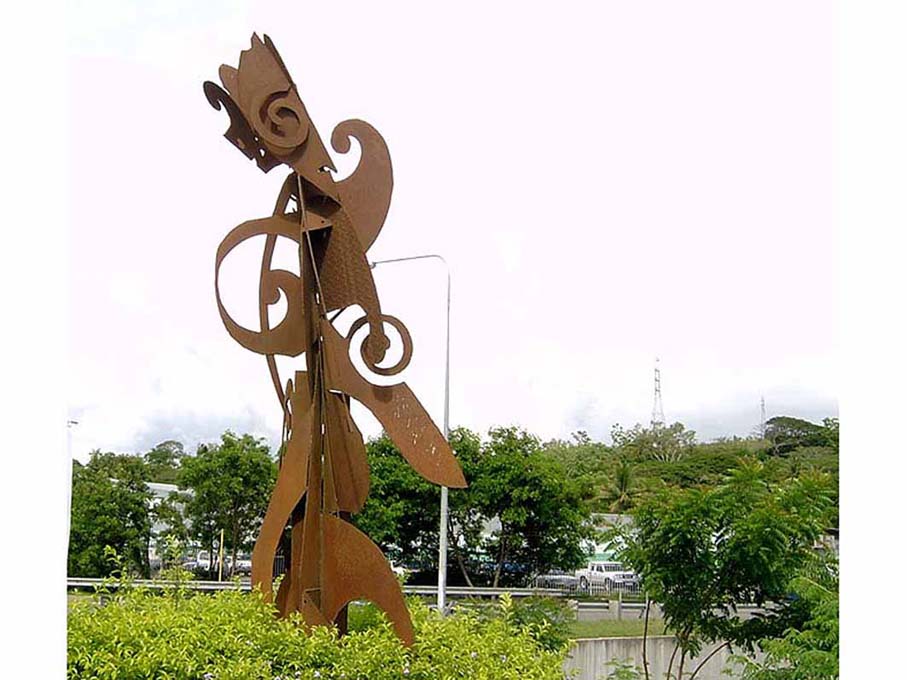
Ruki Fame started out as a welder, who then became one of the first intake of artists at the newly formed Creative Arts Centre around 1973-74. He welded with cut steel from such sources as old 44 gallon drums, chrome bumper bars from wrecked cars, and reinforcing bars. Ruki has had a distinguished career as a sculptor with many architecture related commissions and some large urban sculptures.


pom str sculpt seb-2003 1 sml2 Digit Serial Number

Ruki has inspired and influenced some other artists such as Gikman Kundum and Tommy Deko. The large scale urban rusty steel sculpture in colour was photographed by Sebastian Fowler in a round-about near Waigani in late 2003.

ruki cowboy sculpt s2 Digit Serial Number

Cowboy on a Horse is an early, small, welded steel sculpture exhibited at the Creative Arts Centre early 1970s.

Ruki  is watching the assembly and installation of his large steel sculpture Woman on the PNG Development building at Waigani about 1975. Ruki was commissioned to do this major work through the National Arts School by the building’s architect Jim Birrell from Brisbane who at the time also had a Port Moresby office. Ruki’s design was fabricated in pieces with the help of a steel fabricating firm and was craned into position and attached to the building.  A significant amount of unedited super 8 footage of the whole process is in our archive awaiting an opportunity to be digitised and taken into a documentary.

ruki on dev bank woman head a s2 Digit Serial Number

The other B&W pair of photos shows Ruki’s Woman in context on the wall of the building, and a closeup of her head with the young NAS lecturer Bob Brown photographing it from above being assembled.

Martin Morabubuna

m-Morabubuna-UPNG-13jun-2013-_581-web

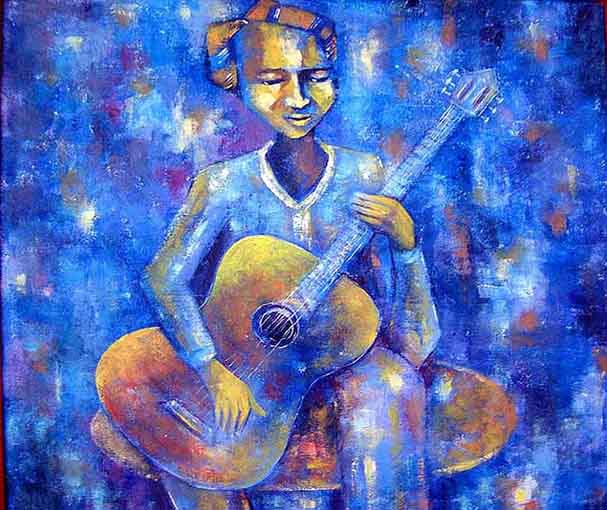
Martin Morabubuna the artist preparing his presentation for a talk at UPNG in June 2013. Martin was a very engaging presenter who put his current work in the context of his Trobriand Islands upbringing, He was finalising his apprenticeship as a traditional master painter story teller when he finished his high school studies to take up a scholarship at the newly opened Creative Arts Centre (National Arts School in the early 1970s).

martin morubbna flyer

His art has continually evolved as he has matured, and he sees himself working with his own messages and traditional stories to tell through new means to an international audience. His deploring of the neglect of serious creative endeavour in PNG over the years was well reasoned and very moving, especially his concern for the dearth of opportunity and lack of support for emerging young talents in the nation.

martin morububuna pntg elabeach -2005  morububuna martin  morububuna martin 1976

Martin’s famous early prints from the 1970s are in expatriate private collections and in some institutional collections in PNG, Australia and overseas. His mature painting style recently is concerned with modern Trobriand Island themes expressed through a subtly inflected style influenced by his studies of cubist european masters.

House of Assembly

HofA in POM-Lea-Irwin ANNOTjul 2013SThe House of Assembly was a very significant heritage building in a complex that was rich with the history of the development period of Australia’s trusteeship administration and the political formation of the nation and its self governing democratic institutions. It started life as a hospital which saw changes and growth and the advent of WW2, but later was turned to serve new administrative and political functions.

Old Museum and Art Gallery
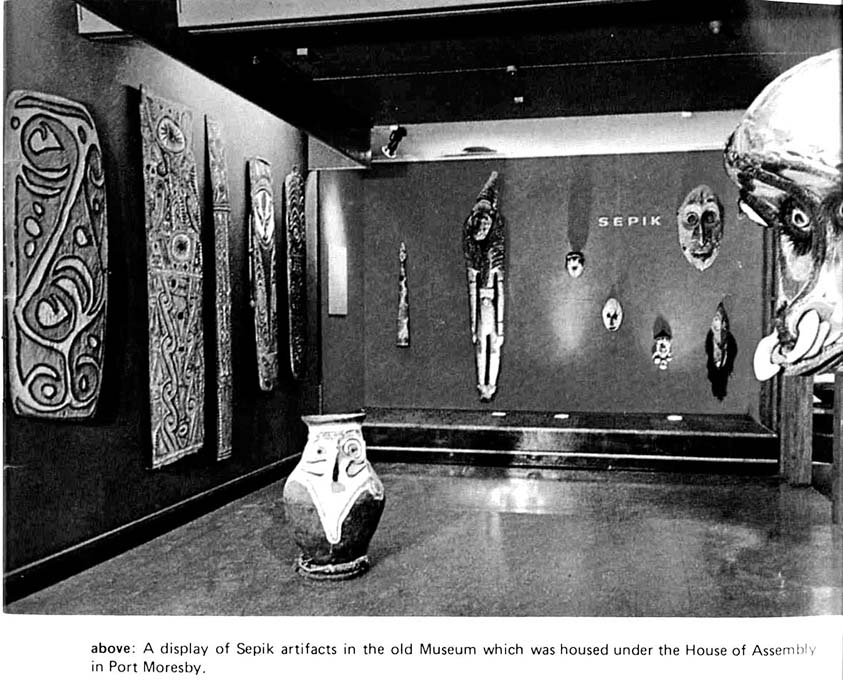
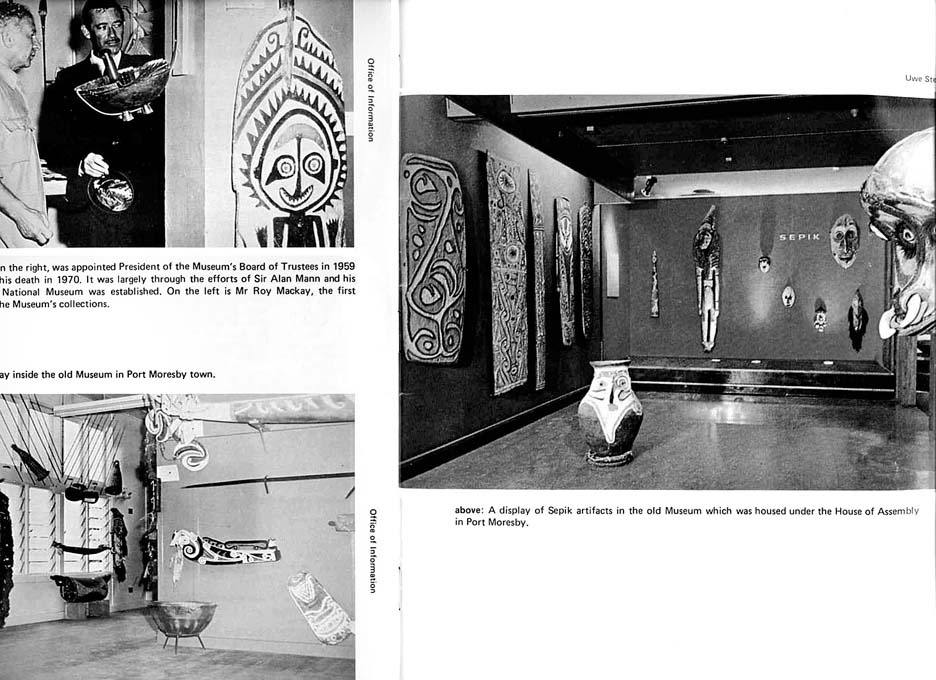
hofa in musm hall det sepik2 Digit Serial Number  hofa old ms'um interr enh ii2 Digit Serial Number  hofa-old msum hall enh 012 Digit Serial Number
Images from Department of Information in National Museum booklet early 1980s

Further significance attached to the building through the fact that the national museum and art gallery was, at also house there at the same time, and mirrored in cultural terms the political developments going on literally above it.

frf hofa 1964- gg opening i2 Digit Serial Number  hofa-'64_d_ies  frf cvr 12 Digit Serial Number

Many important people in post war administration and the heroes of the formation of the nation, as well as numerous important events were tightly linked to the building and should be memorialised with it. Modesty, however, defined the whole complex both inside and out, although the massive block-work screen wall did have an imposing urban street presence.

hofa 2005 ruins det-annot2 Digit Serial Number

Since both the museum (about 1977) and the parliament (1984) left as tenants to occupy their respective new buildings the building had a chequered history and suffered neglect, damage and finally demolition. Although it was the birthplace of the new nation it has been replaced in controversial circumstances by a development that in terms of respect for the past, for lessons from the past and national memory, and legacies for future generations, it leaves a lot to be desired.

The Chamber

Black and white images show a few important moments in the life of the building. The different views show some of the main features of the space.  Note the interpreters’ booths behind glass over looking the proceedings. The early Assemblies catered for a number of key languages as not all members then spoke English or Pisin. 

hofa chamber interpt scragg -32 Digit Serial Number hofa chamber interr 02 enh 20132 Digit Serial Number hofa-old chamber-d_ies 19642 Digit Serial Number
These images were from the Department of Information and Extension Services held in the late Rod Fowler’s archives.

‘Chief’ and PM’s Office


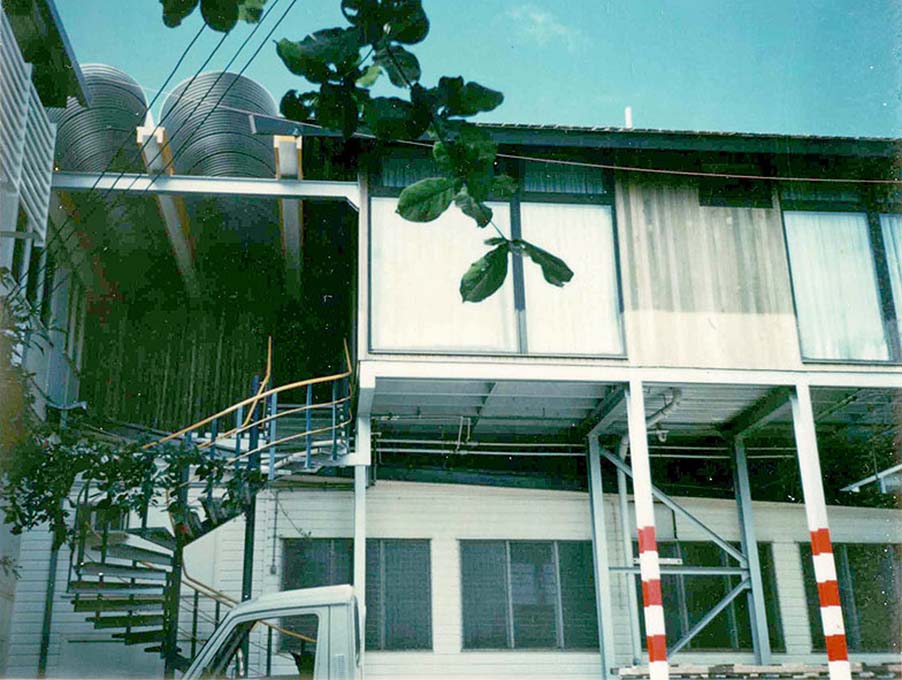
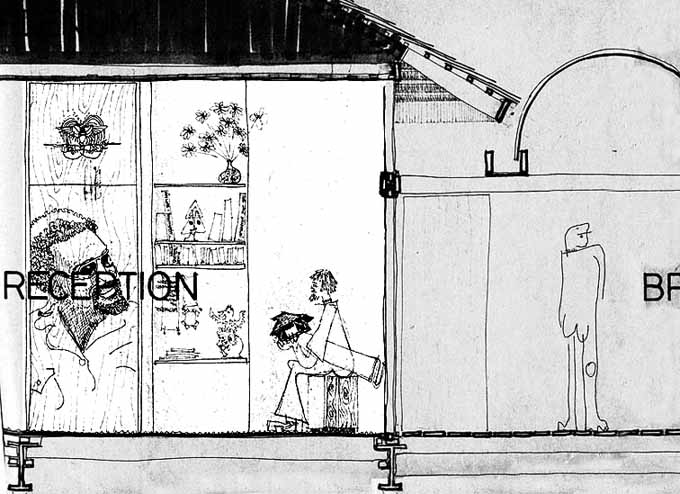
Views of the New office built for the then recently appointed Chief Minister of PNG was built just before independence. He continued to occupy it when he became the first Prime Minister of the new nation.  The building was supported on a steel ‘bridge’ that carried it over the old Museum offices on the ground below.

hofa chiefs offc_ cvr 1975 kauge & green fabric